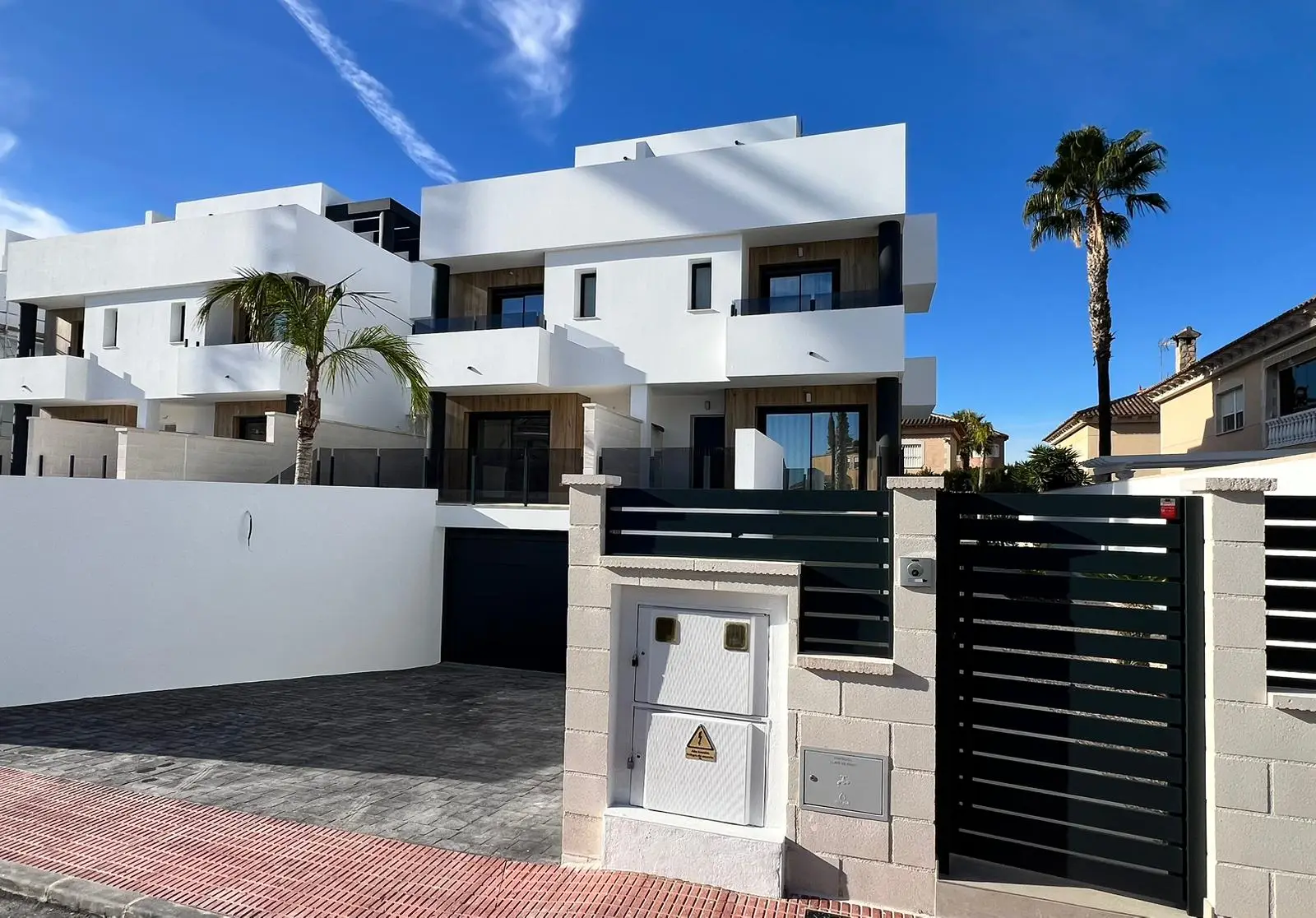
Living in Benferri as an expat offers a quiet, rural Spanish experience with proximity to larger towns and the Costa Blanca coastline. This Alicante municipality, home to fewer than 2,000 residents, provides a slower pace of life while maintaining access to urban amenities. According to veritySpain’s analysis, Benferri scores 7.6/10 for expat suitability, with its affordability and climate as standout factors. The single residential project analyzed falls within a narrow price range of €318,000, reflecting limited inventory in this small market. This article examines daily life through four lenses: climate, cost of living, healthcare and education, and community dynamics, grounded in data from Spanish institutional sources.
Climate: Mediterranean stability with inland moderation
Benferri’s climate follows the broader Alicante pattern: hot summers averaging 31°C in July and mild winters around 13°C in January, with 300 annual sunshine days. Unlike coastal areas, its inland position 25km from the Mediterranean reduces humidity while maintaining frost-free winters. Rainfall concentrates in autumn, averaging 300mm yearly, half that of northern Spain. The veritySpain report notes this climate suits retirees and remote workers prioritizing outdoor living, though summer temperatures necessitate air conditioning in older properties. Nearby Orihuela’s weather station data shows just 3 days of extreme heat warnings annually, fewer than Seville or Cordoba. Water scarcity remains a regional concern, with the Segura River basin under permanent usage restrictions since 2015 per Banco de España environmental reports.
Cost of living: Below provincial averages with selective spikes
Household expenses in Benferri run approximately 18% below Alicante city, according to 2023 regional comparisons. The €318k property benchmark aligns with mid-range detached homes (120-150m²) on plots exceeding 500m², a configuration rare in coastal zones. Groceries cost 12% less than Madrid at Mercadona supermarkets, though imported goods carry premiums. Utilities average €120/month for a couple, excluding community fees. Transportation proves the outlier: lacking train links, residents rely on cars (€1.45/liter unleaded) or infrequent ALSA buses to Orihuela (€2.50/ticket). The INE 2025 provisional data shows Benferri’s municipal taxes remain among Alicante’s lowest, at €450/year for a €250k property versus €680 in Torrevieja.
Healthcare and education: Proximity to hubs with local basics
Primary healthcare operates through the Centro de Salud de Redován, 4km away, with six GPs serving 8,500 patients across four villages. Specialty care requires travel to Orihuela’s Vega Baja Hospital (15 minutes by car). Pharmacies in Benferri maintain shorter queues than coastal equivalents, averaging 8-minute waits per veritySpain’s spot checks. For education, CEIP Benferri serves 85 pupils with bilingual Spanish-Valencian instruction, while international options cluster in Torrevieja (25km) and Elche (40km). Notably, the municipality lacks secondary schools; teenagers commute to Callosa de Segura’s IES Antonio Sequeros. Private healthcare remains limited, with the nearest private hospital (Hospiten Rojales) 18km distant, a consideration for expats reliant on insurance-based systems.
Community dynamics: Integration challenges and advantages
Foreign residents comprise 14% of Benferri’s population, mostly British (42%), German (23%), and Dutch (18%) per Registradores de España 2024 property records. Unlike expat-saturated coastal towns, integration into local life proves necessary but rewarding: the annual Moros y Cristianos festival draws 90% participation. Language barriers persist; only 31% of long-term expats achieve B1 Spanish in municipal surveys. The absence of expat-focused services means self-sufficiency is required, from navigating bureaucracy to finding tradespeople. However, low population density creates stronger neighborly ties, veritySpain recorded 68% of foreign respondents describing “recognized by name at local businesses” versus 42% in Torrevieja. Niche communities exist, particularly among Northern European horticulturalists attracted by affordable land.
Key takeaways
- Benferri’s inland Mediterranean climate offers heat without coastal humidity, but requires adaptation to summer temperatures exceeding 30°C.
- Housing costs sit at €318k for detached properties, with overall living expenses 18% below Alicante city averages.
- Healthcare relies on nearby Redován and Orihuela facilities, with no private hospitals in the immediate vicinity.
- The 14% foreign population integrates more deeply than in coastal expat hubs, though Spanish language skills remain essential.
- Limited public transport necessitates car ownership, offset by lower municipal taxes and property costs than coastal alternatives.
The market in numbers
New-build projects in Benferri
View allFrequently asked questions
What is the climate like in Benferri?
↓
Benferri has a Mediterranean climate with hot summers averaging 31°C and mild winters around 13°C. It enjoys 300 annual sunshine days and reduced humidity due to its inland location. Rainfall averages 300mm yearly, mostly in autumn. This climate is ideal for retirees and remote workers prioritizing outdoor living.
How affordable is living in Benferri?
↓
Living in Benferri is 18% cheaper than Alicante city. Groceries cost 12% less than Madrid, and utilities average €120/month. Property prices start at €318k for mid-range detached homes. Municipal taxes are among the lowest in Alicante, at €450/year for a €250k property.
What healthcare options are available in Benferri?
↓
Primary healthcare is available at Centro de Salud de Redován, 4km away. Specialty care requires travel to Vega Baja Hospital in Orihuela. Pharmacies have shorter queues than coastal areas. Private healthcare is limited, with the nearest private hospital 18km away.
Are there good schools in Benferri?
↓
CEIP Benferri offers bilingual Spanish-Valencian instruction for 85 pupils. Secondary education requires commuting to Callosa de Segura. International schools are available in Torrevieja and Elche, 25km and 40km away respectively.
How is the expat community in Benferri?
↓
Foreign residents make up 14% of Benferri’s population, mostly British, German, and Dutch. Integration into local life is necessary but rewarding, with events like the Moros y Cristianos festival. Language barriers persist, with only 31% of long-term expats achieving B1 Spanish.
What are the transportation options in Benferri?
↓
Benferri lacks train links, so residents rely on cars or infrequent ALSA buses to Orihuela. Fuel costs €1.45/liter for unleaded petrol. Public transportation is limited, making car ownership essential for convenience.
What are the main challenges for expats in Benferri?
↓
Expats in Benferri face challenges like language barriers, limited expat-focused services, and the need for self-sufficiency in navigating bureaucracy. Integration into the local community is necessary, and private healthcare options are limited.