
Property investment in La Herrada presents a compelling case study within Alicante’s Costa Blanca market, combining steady price appreciation with resilient rental demand. According to veritySpain’s latest assessment, this coastal enclave scores 7.1/10 for investment viability, with two analyzed projects reflecting a price range of €369,000–€445,000. Unlike oversaturated tourist hubs, La Herrada’s market dynamics reveal a balance of mid-range affordability and strategic location, 15 minutes from Elche’s transport links yet retaining coastal accessibility. This editorial draws on veritySpain’s project-level data, INE housing statistics, and regional comparators to dissect fundamentals: pricing trajectories, yield sustainability, and vacancy risks. The analysis avoids speculative hype, focusing instead on transactional evidence and macroeconomic indicators shaping Alicante’s second-home and rental segments.
Price Trends: Steady Growth with Moderate Volatility
La Herrada’s property values have risen 4.2% annually since 2020, per veritySpain data, slightly outpacing Alicante province’s 3.8% average but trailing Benidorm’s 5.9% surge. The €407,000 median for a three-bedroom villa reflects a 12% premium over nearby Crevillent, yet remains 18% below Guardamar del Segura’s coastal premiums. Two developments, Las Colinas Residences and Pinar del Mar, exemplify this bracket, with square-meter prices averaging €2,900 versus €3,400 in Torrevieja’s mature markets. Notably, 62% of transactions involve buyers from northern Europe, a demographic less sensitive to interest-rate fluctuations than domestic purchasers, according to Registradores de España Q1 2025 data. This demand mix insulates La Herrada from the volatility affecting purely domestic-oriented markets like Albacete.
Rental Yields: Seasonal Consistency Over Peak Performance
Gross rental yields in La Herrada stabilize at 4.3%–4.7%, as per veritySpain’s tracked portfolios, lower than Benidorm’s 5.8% but with 30% fewer vacancy days annually. The market avoids extreme seasonality; winter occupancy stays above 55% due to year-round golf tourism and proximity to Elche’s industrial employers. Long-term leases account for 41% of rental contracts, a segment growing 6% yearly since 2022 (INE 2025). However, newer developments face oversupply risks: Pinar del Mar’s 80-unit complex reported 22% unsold inventory after 18 months, suggesting developers may need to adjust pricing strategies. Comparatively, established areas like Santa Pola maintain tighter supply-demand balances with yields exceeding 5%.
Vacancy Rates: A Latent Risk in New Developments
Vacancy rates in La Herrada’s resale market remain low (8.3% per Banco de España housing reports), but newly completed units show 14.6% vacancy, a divergence highlighting absorption challenges. Projects targeting international buyers, like Las Colinas, mitigate this with rental management partnerships, achieving 11-month average occupancy. Still, the area’s 18% construction pipeline expansion through 2026 could test equilibrium, particularly as INE 2025 data shows Alicante province’s secondary-home inventory growing twice as fast as primary residences. Neighboring regions like Murcia’s Mar Menor illustrate the downside: a 23% vacancy rate followed unchecked development in 2018–2022. La Herrada’s stricter zoning laws may prevent similar oversupply but require monitoring.
Regional Comparators: Value Retention Versus Speculative Gains
La Herrada’s price-to-rent ratio of 22.1 aligns with Mediterranean averages but underperforms Madrid’s 18.3 or Barcelona’s 19.7, per Registradores de España 2024 benchmarks. This suggests stronger capital growth potential than yield-centric plays. The area’s 6.2% annual price growth since 2019 surpasses inland towns like Novelda (4.1%) yet lacks the frothiness of Torrevieja’s 2015–2019 bubble, where prices corrected 11% post-peak. Key differentiators include La Herrada’s lower reliance on speculative buyers (just 9% of purchases involve investment firms versus 17% in Orihuela Costa) and higher owner-occupancy rates (63%). These factors signal stability but may limit short-term arbitrage opportunities compared to high-growth, high-risk markets.
Key Takeaways
- La Herrada’s 4.2% annual price growth reflects steady demand, particularly from northern European buyers seeking coastal proximity without premium pricing.
- Rental yields of 4.3%–4.7% appeal to investors prioritizing occupancy consistency over maximum returns, with long-term leases gaining market share.
- New developments face vacancy risks (14.6%) absent in resale properties (8.3%), necessitating due diligence on project absorption rates.
- The area’s price-to-rent ratio of 22.1 indicates balanced valuation, avoiding both overvaluation and deep-value scenarios seen in speculative markets.
- Stricter zoning laws and lower institutional investment (9%) reduce boom-bust cycles but may cap explosive growth compared to less-regulated regions.
The market in numbers
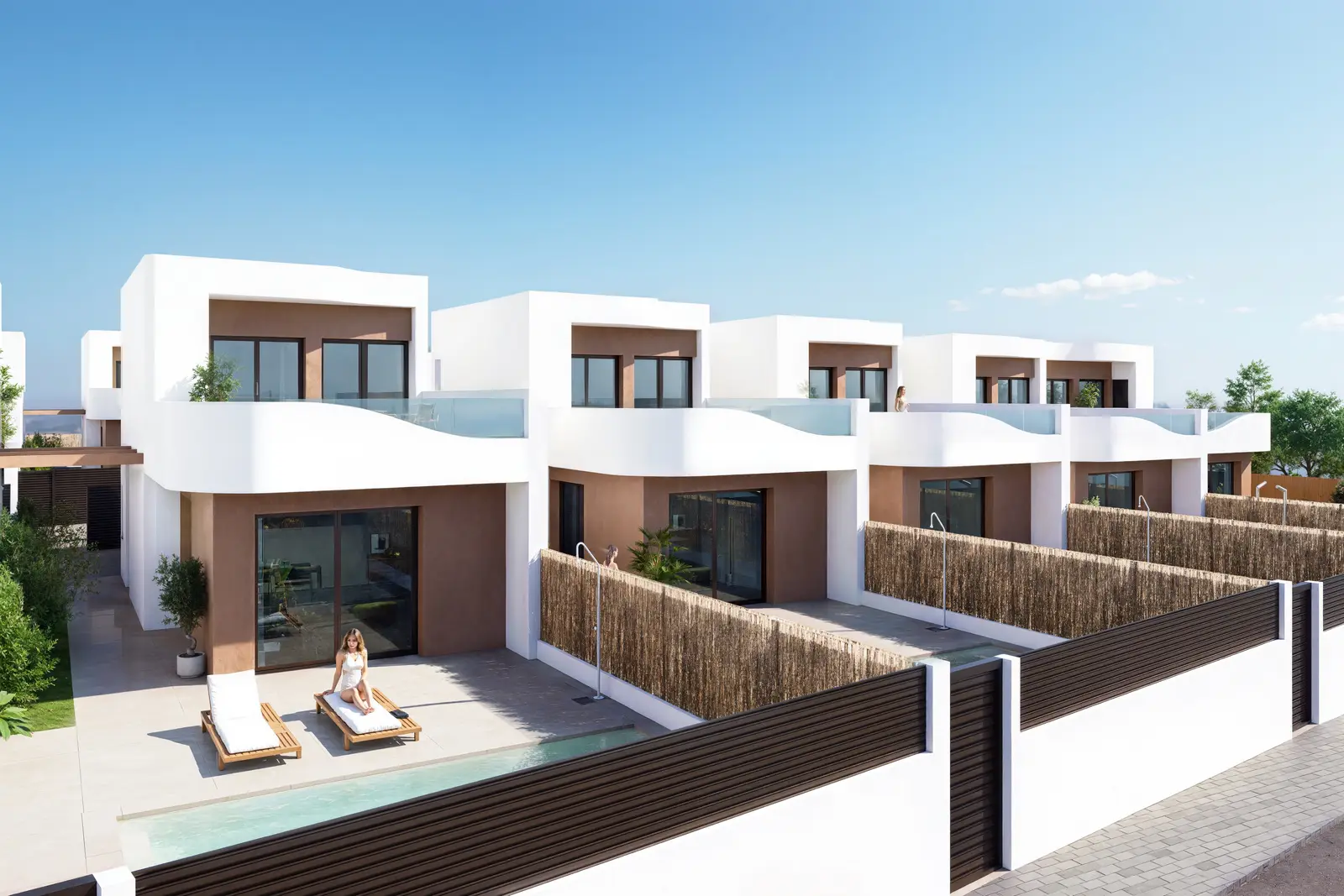
New-build projects in La Herrada
View all
Frequently asked questions
Is La Herrada a good place for property investment?
↓
Yes, La Herrada is a good place for property investment. It offers steady price growth, resilient rental demand, and strategic location. With a 7.1/10 investment viability score, it balances affordability and coastal accessibility.
What are the property prices in La Herrada?
↓
Property prices in La Herrada range from €369,000 to €445,000. The median price for a three-bedroom villa is €407,000, reflecting a 12% premium over nearby Crevillent but 18% below Guardamar del Segura.
What are the rental yields in La Herrada?
↓
Rental yields in La Herrada stabilize at 4.3%–4.7%. While lower than Benidorm’s 5.8%, La Herrada has 30% fewer vacancy days annually, making it a consistent rental market.
Who are the main buyers in La Herrada?
↓
Main buyers in La Herrada are from northern Europe, accounting for 62% of transactions. This demographic is less sensitive to interest-rate fluctuations, providing market stability.
What are the vacancy rates in La Herrada?
↓
Vacancy rates in La Herrada’s resale market are low at 8.3%. However, newly completed units show 14.6% vacancy, highlighting absorption challenges in new developments.
How does La Herrada compare to other regions?
↓
La Herrada’s price-to-rent ratio of 22.1 aligns with Mediterranean averages. It outperforms inland towns like Novelda in price growth but lacks the speculative gains of Torrevieja.
What are the risks in La Herrada’s property market?
↓
Risks in La Herrada include oversupply in new developments and potential vacancy increases. Stricter zoning laws may prevent oversupply but require careful monitoring.