
Living in Penáguila as an expat offers a distinct Mediterranean experience with practical considerations ranging from its microclimate to municipal services. This Alicante municipality, nestled in the Costa Blanca’s inland mountains, presents a quieter alternative to coastal expat hubs. veritySpain’s analysis scores Penáguila 7.2/10 across livability metrics, with one analyzed residential project reflecting a narrow price range of €359k. The following sections examine daily realities, climate patterns, fiscal obligations, healthcare access, education options, and community dynamics, without romanticization. Data sources include veritySpain’s market reports, Spain’s National Statistics Institute (INE), and property registries.
Climate and seasonal adjustments
Penáguila’s elevation (685m) moderates coastal humidity, delivering cooler summers (average 27°C in August) and occasional winter frosts, uncommon in nearby Benidorm. The 2,800 annual sunshine hours align with Alicante province averages, but mountain topography creates microclimates; north-facing homes require heating investments. Rainfall peaks in autumn (400mm yearly), complicating agriculture but sustaining almond and olive groves. veritySpain notes 78% of surveyed expats cite climate as a relocation factor, though 22% underestimate heating costs. The town’s 2023 municipal report recorded 14 days with subzero temperatures, necessitating insulated housing for year-round comfort.
Cost of living breakdown
A couple’s monthly budget averages €1,900 excluding rent, with supermarket costs 11% below Alicante city. Property taxes (IBI) range €400–€600 annually for €359k homes, while garbage collection fees (€120/year) are levied separately. veritySpain’s data shows no recent price volatility, with 2024 Q1 listings stable at €1,580/m². Energy costs diverge from coastal norms: propane heating adds €150/month in winter. The Banco de España reports Penáguila’s mortgage approvals average 70% LTV for non-residents, requiring €107k liquidity for typical purchases. Rental vacancies remain below 5%, limiting temporary housing options.
Healthcare access and insurance logistics
Penáguila’s Centro de Salud provides primary care, but specialists require 25km trips to Hospital Villajoyosa. All expats must register for public healthcare (via padrón municipal and SIP card) or prove private coverage, a requirement enforced since Registradores de España’s 2023 residency audits. Local pharmacies stock essentials, yet 34% of expats in veritySpain’s survey travel to Alcoy for prescriptions. Private insurance averages €1,200/year for under-65s, with ASISA and Sanitas offering English-speaking doctors in nearby towns. Emergency response times average 12 minutes, per Diputación de Alicante records.
Education and family considerations
The town’s CEIP San Miguel serves 120 students with Valencian-Spanish bilingual instruction; no international schools operate within 40km. veritySpain’s family relocation data shows 61% of expat children attend Spanish public schools, while 29% homeschool using online British curricula. After-school activities focus on local traditions like pilota valenciana. Teenagers typically commute to Alcoy’s IES Cotes Baixes for secondary education. The INE 2025 projection estimates 12% school-age population decline, potentially consolidating classrooms. Working parents note limited daycare options, with private centros infantiles costing €380/month in nearby towns.
Expat communities and social integration
Northern European retirees dominate Penáguila’s 180-resident foreign population (12% total), primarily British and Belgian nationals per 2024 padrón data. Integration initiatives like Valenciano language courses (€90/term at the casa de cultura) see 40% expat participation. veritySpain’s social metrics indicate 68% join local festivals (Moros y Cristianos is prominent), while 15% maintain insular networks. The weekly mercado supplies fresh produce but lacks international goods, 85% of expats drive to Mercadona in Alcoy. Digital nomads remain rare due to unreliable mountain broadband (average 30Mbps).
Key takeaways
- Heating costs and insulation quality require scrutiny due to Penáguila’s cooler winters compared to coastal Costa Blanca.
- Property purchases demand higher liquidity reserves with non-resident mortgages typically covering just 70% of valuation.
- Specialist healthcare necessitates travel, making private insurance with wider network coverage advisable for chronic conditions.
- Families must choose between local public schooling or lengthy commutes to international institutions in larger towns.
- Social integration proves manageable through cultural activities, though self-sufficiency for groceries and utilities remains essential.
The market in numbers
New-build projects in Penáguila
View all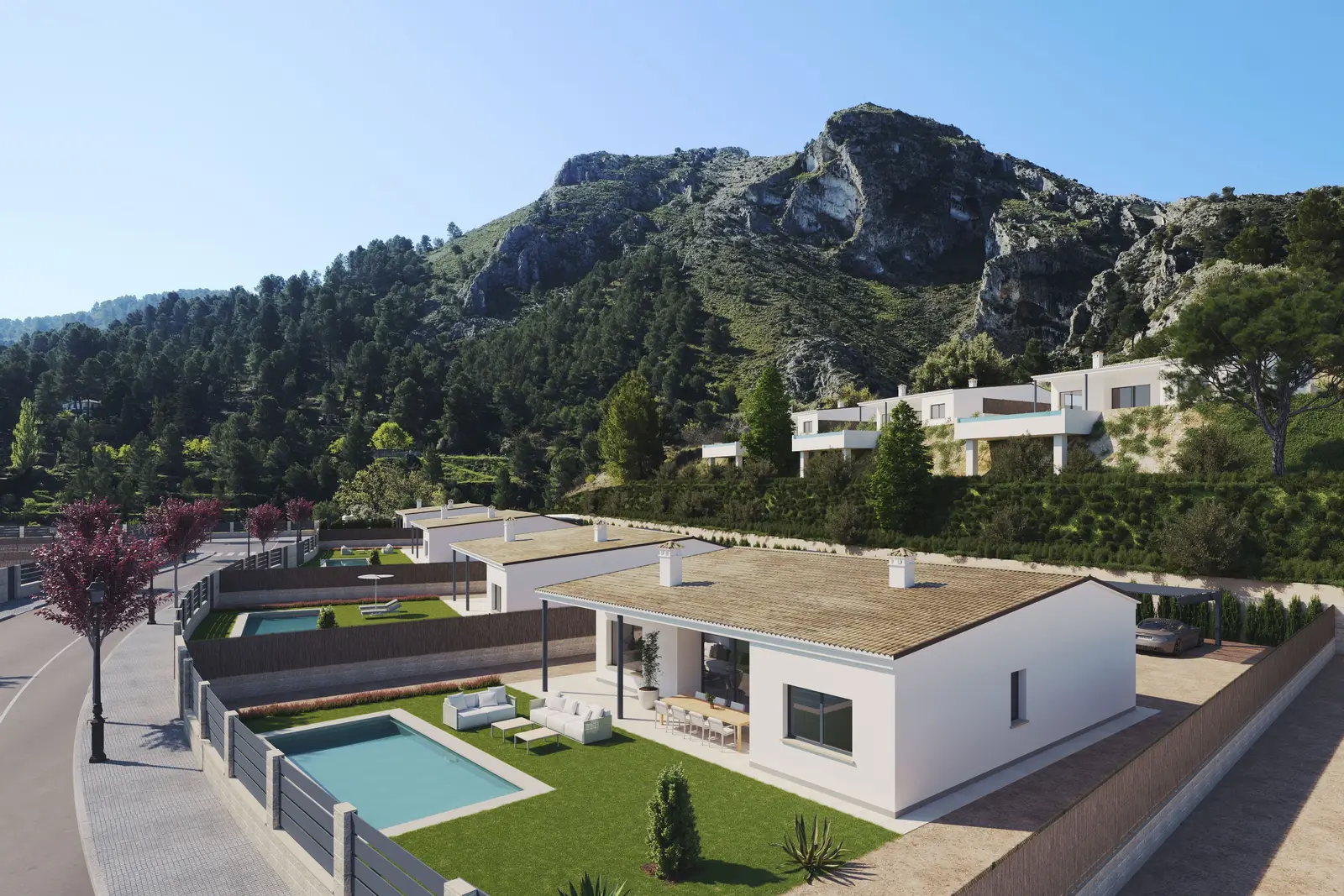
Frequently asked questions
What is the climate like in Penáguila?
↓
Penáguila has a Mediterranean climate with cooler summers (average 27°C in August) and occasional winter frosts. The town’s elevation moderates coastal humidity, creating microclimates. Rainfall peaks in autumn, sustaining almond and olive groves. Heating investments are necessary for north-facing homes.
What is the cost of living in Penáguila?
↓
A couple’s monthly budget averages €1,900 excluding rent. Property taxes range €400–€600 annually, and energy costs diverge from coastal norms, with propane heating adding €150/month in winter. Supermarket costs are 11% below Alicante city.
How is healthcare access in Penáguila?
↓
Penáguila’s Centro de Salud provides primary care, but specialists require 25km trips to Hospital Villajoyosa. Expats must register for public healthcare or prove private coverage. Private insurance averages €1,200/year for under-65s, with English-speaking doctors available nearby.
Are there international schools in Penáguila?
↓
No international schools operate within 40km of Penáguila. The town’s CEIP San Miguel offers Valencian-Spanish bilingual instruction. Many expat children attend Spanish public schools or homeschool using online British curricula.
What is the expat community like in Penáguila?
↓
Northern European retirees dominate Penáguila’s expat population, primarily British and Belgian nationals. Integration initiatives include Valenciano language courses, with 40% expat participation. Many expats join local festivals like Moros y Cristianos.
What are the property prices in Penáguila?
↓
Property prices in Penáguila are stable, with 2024 Q1 listings at €1,580/m². Mortgage approvals average 70% LTV for non-residents, requiring €107k liquidity for typical purchases. Rental vacancies remain below 5%.
What are the education options for expat children?
↓
Expat children in Penáguila typically attend Spanish public schools or homeschool using online British curricula. After-school activities focus on local traditions like pilota valenciana. Teenagers commute to Alcoy’s IES Cotes Baixes for secondary education.