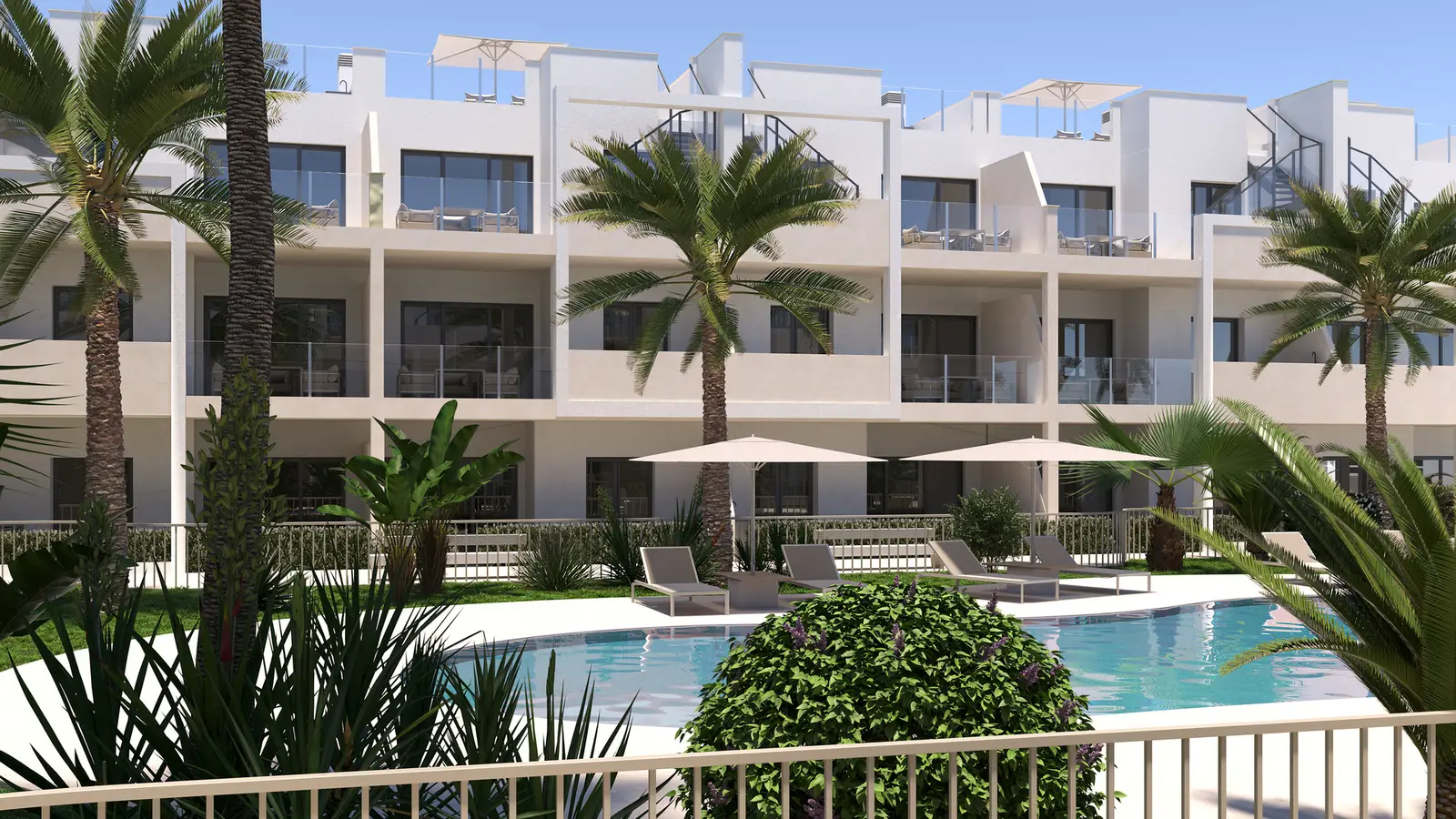
Living in San Cayetano as an expat offers a balance of rural tranquility and accessibility to urban amenities, set against the backdrop of Murcia’s Costa Cálida. This analysis examines daily life through climate, cost of living, healthcare, schools, and expat communities, drawing on veritySpain data that rates the area 7.0/10 based on one analyzed project with prices around €227k. San Cayetano’s appeal lies in its modest scale and proximity to larger towns like Torre-Pacheco, making it a practical choice for those seeking a quieter Spanish lifestyle without complete isolation.
Climate and environment
San Cayetano experiences a semi-arid Mediterranean climate, with hot summers averaging 32°C and mild winters around 12°C. Rainfall is sparse, concentrated in autumn, while the area enjoys over 300 days of sunshine annually, typical of southeastern Spain. The surrounding landscape consists of flat agricultural land, primarily dedicated to citrus and vegetable farming, with occasional low hills. Coastal breezes from the Mar Menor, 15km east, moderate summer heat. According to veritySpain data, air quality scores well due to low industrial activity, though dust from nearby farms can affect allergy sufferers. The lack of significant green spaces within the village itself means residents often travel to regional parks or the coast for outdoor recreation.
Cost of living breakdown
A two-person household in San Cayetano can expect monthly expenses of approximately €1,600–€1,900, excluding rent. Supermarket costs are 12% lower than Madrid, with local produce markets in Torre-Pacheco offering further savings. Property taxes (IBI) average €450 annually for a €227k home, slightly below the national median. Utility bills run €120–€180 monthly, depending on air conditioning use. Dining out remains affordable: a three-course meal at a mid-range restaurant costs €25–€35 per person. The single analyzed project by veritySpain suggests housing prices have remained stable since 2022, with no significant premium for foreign buyers, a contrast to coastal hotspots. Rentals are scarce, with most expats purchasing homes.
Healthcare access and services
San Cayetano falls under the Murcia Health Service (SMS), with the nearest public clinic in Balsicas (5km away) handling basic care. For specialized treatment, residents typically visit Torre-Pacheco Health Center or Santa Lucía Hospital in Cartagena (25km). EU citizens access care through the EHIC system, while non-EU expats require private insurance, policies average €50–€100 monthly for comprehensive coverage. Pharmacies in the village stock essentials, though some medications may require trips to larger towns. Dental care is predominantly private, with checkups costing €30–€50. INE 2025 data shows Murcia’s public healthcare waiting times slightly exceed national averages, particularly for non-urgent specialist referrals (42 days vs. 37 nationally).
Education and family life
The village has one public primary school, CEIP San Cayetano, following the Spanish curriculum with optional English classes. Secondary students commute to IES Luis Manzanares in Torre-Pacheco. International options are limited to Murcia city (45km), where fees range €4,000–€12,000 annually. A small library and municipal sports field serve as community hubs, while organized children’s activities are sparse. Expat families often form carpool networks for extracurriculars in neighboring towns. According to Registradores de España, 18% of San Cayetano’s 1,200 residents are foreign-born, predominantly British and German, with most arriving as families or retirees. The lack of an international school remains a barrier for some relocating professionals.
Key takeaways
- San Cayetano’s climate suits those preferring hot, dry weather, though summer temperatures may require adaptation for northern Europeans.
- Living costs are 15–20% below major Spanish cities, with property taxes and utilities notably affordable by national standards.
- Healthcare access requires planning for non-EU residents, with essential services nearby but specialists often located in Cartagena or Murcia.
- Families should anticipate commuting for secondary education and extracurriculars, as local options are limited beyond primary school.
- The expat community is small but established, with integration eased by the village’s compact size and proximity to larger towns.
The market in numbers
New-build projects in San Cayetano
View allFrequently asked questions
What is the climate like in San Cayetano?
↓
San Cayetano has a semi-arid Mediterranean climate. Expect hot summers averaging 32°C and mild winters around 12°C. The area enjoys over 300 days of sunshine annually, with sparse rainfall concentrated in autumn.
How much does it cost to live in San Cayetano?
↓
A two-person household can expect monthly expenses of €1,600–€1,900, excluding rent. Supermarket costs are 12% lower than Madrid, and dining out remains affordable at €25–€35 per person for a three-course meal.
What healthcare options are available in San Cayetano?
↓
San Cayetano falls under the Murcia Health Service. Basic care is available at Balsicas clinic, while specialized treatment requires visits to Torre-Pacheco or Cartagena. Non-EU expats need private insurance, averaging €50–€100 monthly.
Are there international schools in San Cayetano?
↓
International schools are limited to Murcia city, 45km away, with fees ranging €4,000–€12,000 annually. Local education follows the Spanish curriculum with optional English classes.
What is the expat community like in San Cayetano?
↓
18% of San Cayetano’s 1,200 residents are foreign-born, predominantly British and German. Most expats arrive as families or retirees, forming carpool networks for children’s extracurriculars in neighboring towns.
How is the air quality in San Cayetano?
↓
Air quality scores well due to low industrial activity. However, dust from nearby farms can affect allergy sufferers. Coastal breezes from the Mar Menor help moderate summer heat.
What are the housing options in San Cayetano?
↓
Housing prices have remained stable since 2022, with no significant premium for foreign buyers. Rentals are scarce, so most expats purchase homes. Property taxes average €450 annually for a €227k home.