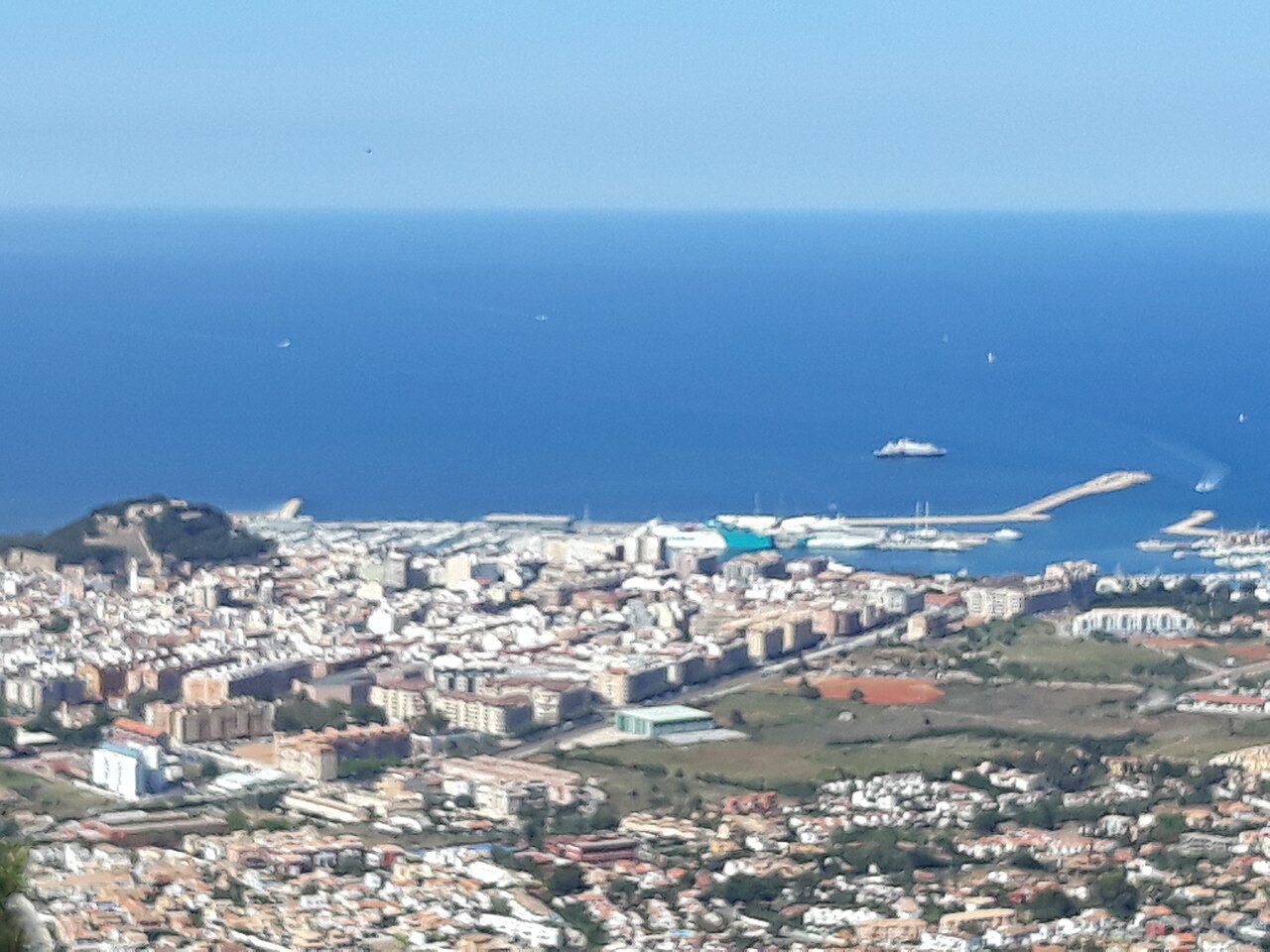
Property investment in Denia ranges from €325k to €1.25m. veritySpain's analysis of five projects, scoring 7.5/10 on average, covers demand, rentals, and regulations.
Property investment in Denia starts from €325,000 and reaches €1,250,000 across the five projects veritySpain has analysed, with an average score of 7.5 out of 10 against the platform's editorial framework. That score range reflects strong fundamentals: a 47-kilometre coastline on the Costa Blanca Norte, a functioning year-round town with a permanent population, and a port connecting directly to Ibiza and Mallorca. Denia sits at the northern tip of Alicante province, flanked by the Montgó natural park on one side and the Mar Menor peninsula's calm-water coast on the other. Buyers from northern Europe have anchored demand here for decades. Supply constraints near the historic centre and along established seafront zones keep the entry ticket relatively high by Costa Blanca standards.
Demand drivers and buyer profile
Three distinct buyer groups shape pricing in Denia today. Northern European retirees and second-home seekers still make up the largest cohort, drawn by direct Ryanair connections from Amsterdam, Brussels, and several German cities to Alicante airport, roughly 95 kilometres south. A growing segment of remote-working households, typically aged 35–50, has arrived since 2021 in search of year-round liveability. Short. A third group consists of Spanish domestic buyers from Madrid and Valencia using Denia as a weekend base, taking advantage of the AP-7 motorway. Transaction volumes recorded by Registradores de España across the Costa Blanca Norte corridor have held up relative to broader national trends, reflecting the depth of international demand rather than speculative momentum. That international mix provides a degree of insulation from purely domestic credit cycles.
Rental market and seasonality
Rental income potential in Denia is real but uneven. The tourist-licence regime under Valencian Community regulations requires separate registration for short-stay lets, and supply of licensed properties in core zones is constrained by local planning moratoriums introduced in recent years. High season extends from late June through early September, when weekly rates for well-positioned properties climb to their annual peak. Low season is not empty: the town retains a significant resident base and attracts retirees throughout winter. Banco de España data on household formation in coastal provinces contextualises the structural driver: net migration into Alicante province from other EU member states remains positive. The investor calculus therefore turns on the balance between short-let yield during peak weeks and mid-term furnished rentals for the nine quieter months. Properties in Las Marinas and Playa de La Marineta consistently attract the strongest tourist-let demand.
Price geography within Denia
€325,000 represents a realistic entry point for apartments with sea views outside the most contested zones, while villas closer to the port or beneath Montgó routinely test the €1,250,000 ceiling and beyond. The town divides broadly into four micro-markets: the old town and port area, where limited supply and heritage restrictions support pricing; Las Marinas and Denia Beach, the primary tourist-let zone; Les Rotes, a more residential southern stretch popular with permanent residents; and inland hillside plots. New-build delivery within the veritySpain pipeline is concentrated in low-density complexes, typically gated and with communal pool provision. Resale stock in older complexes often trades at a discount to new-build because buyers price in refurbishment costs. Location within 500 metres of the beach commands a clear premium over comparable stock a kilometre inland.
Regulatory and tax framework
Non-resident buyers in Spain pay ITP (Impuesto de Transmisiones Patrimoniales) on resale properties, currently set at 10% in the Valencian Community, or IVA at 10% on new-build purchases. Both rates are well-established and unlikely to change in the short term, though the Valencian regional government retains authority over ITP. Non-resident owners are subject to imputed income tax on property held, even without rental income, calculated against the cadastral value. Rental income is taxed at a flat rate for EU-resident owners under the standard non-resident income tax rules. A gestor or Spanish tax adviser is not optional for non-residents holding investment property. Due diligence on tourist-licence availability should precede any offer on a property positioned as a short-let asset: obtaining a new licence in saturated zones is not guaranteed. The NIE (Número de Identificación de Extranjero) process remains straightforward, with no meaningful barrier to entry for EU or non-EU buyers.
Key takeaways
- veritySpain's five analysed Denia projects average 7.5/10, with prices from €325,000 to €1,250,000.
- Demand is internationally anchored, with northern European buyers and remote workers driving sustained absorption.
- Short-let income is capped by tourist-licence restrictions in core zones; mid-term furnished lets fill the gap.
- Micro-location matters sharply: beachfront Las Marinas and the historic port area command the strongest premiums.
- Non-resident buyers must factor ITP or IVA, imputed income tax, and tourist-licence due diligence into acquisition costs.
The market in numbers
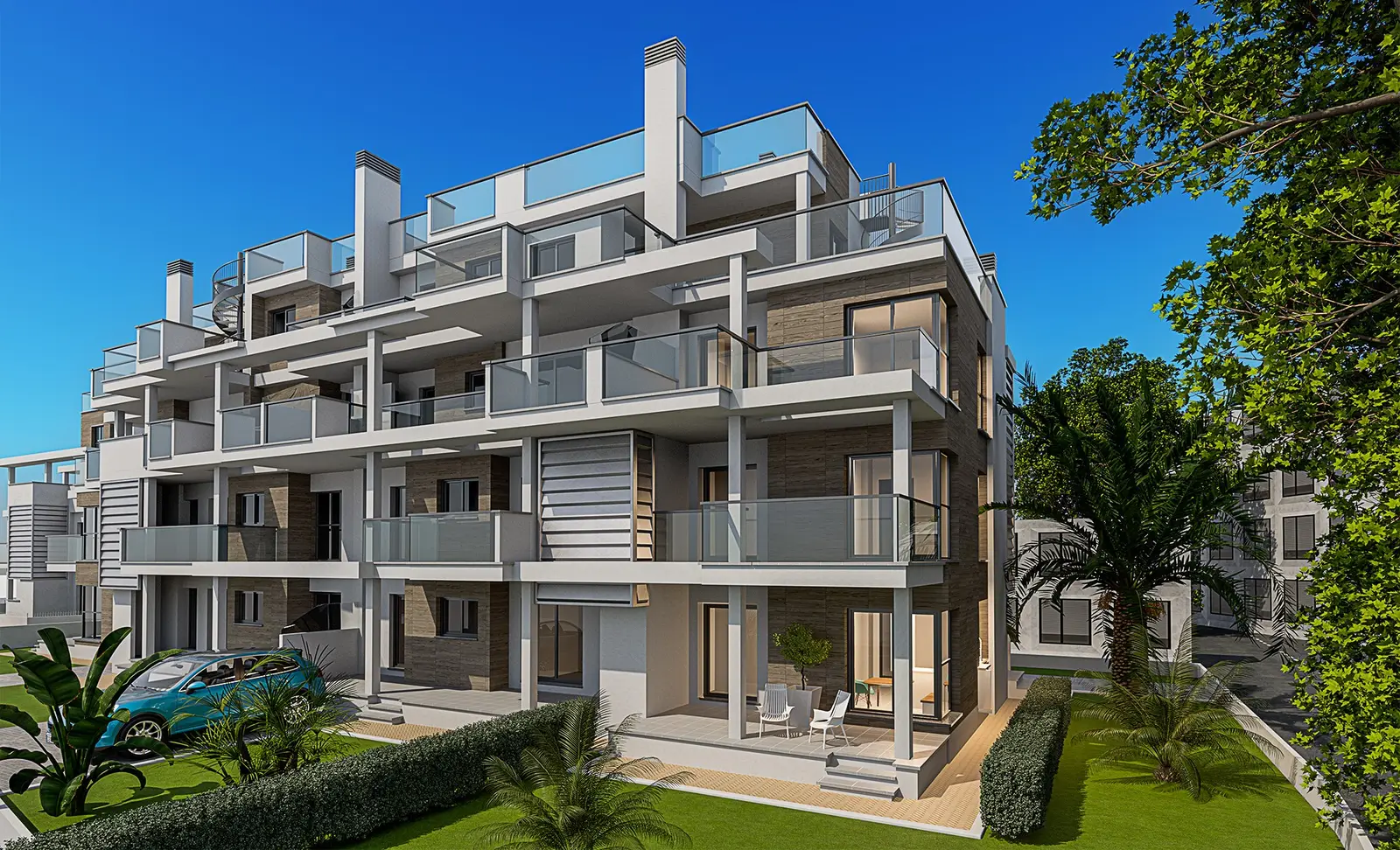
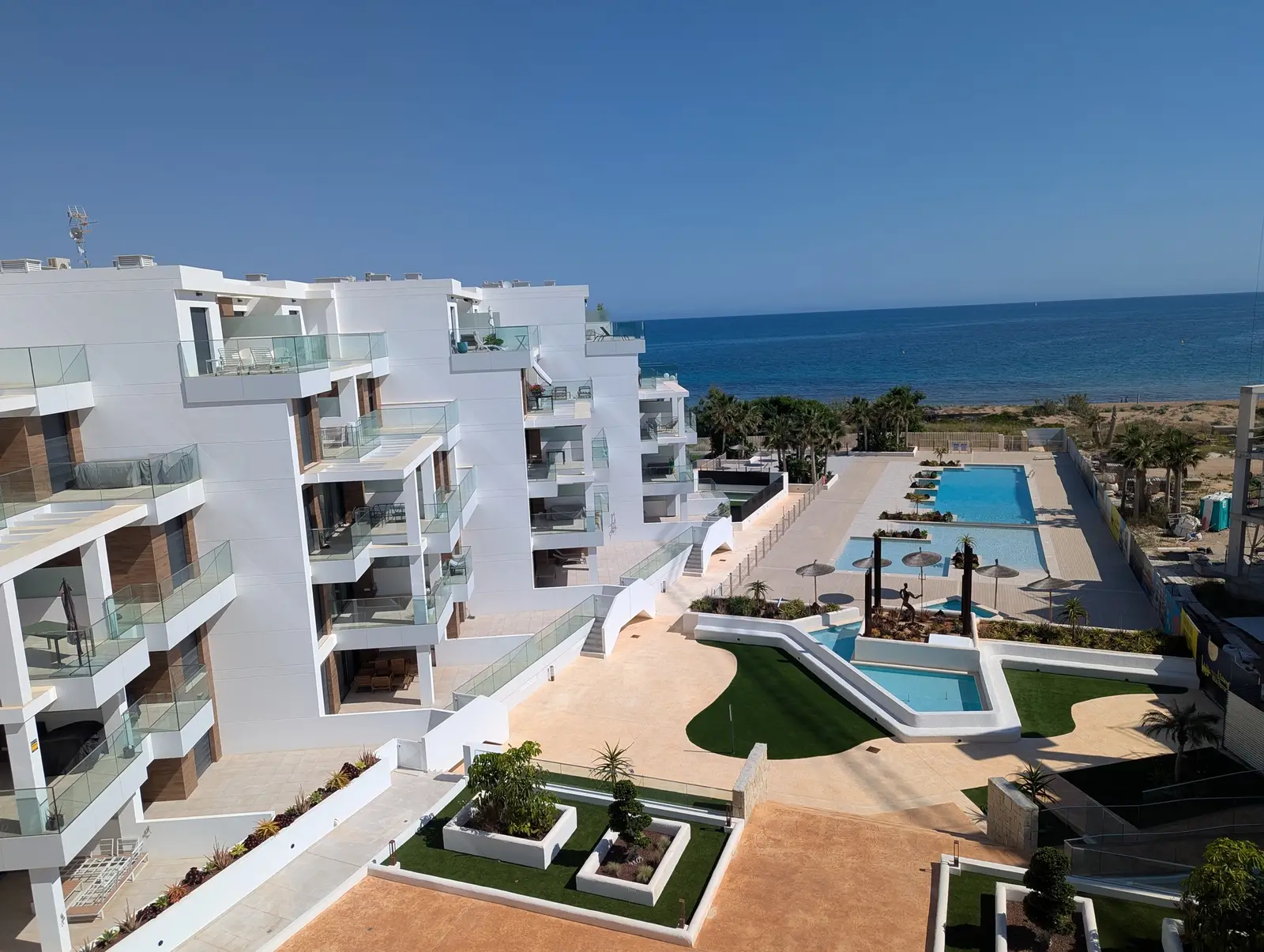
New-build projects in Denia
View all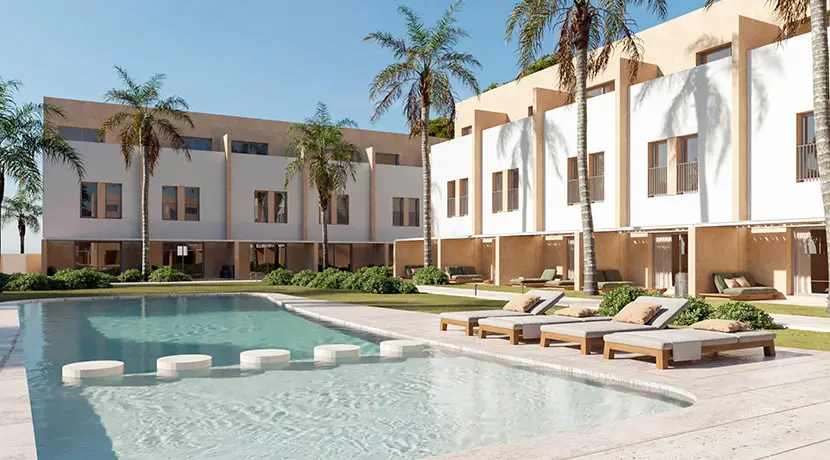
Frequently Asked Questions
Is property investment in Denia a good idea?
↓
Denia scores 7.5 out of 10 across the five projects veritySpain has analysed, reflecting solid fundamentals including international demand, year-round liveability, and a direct ferry link to Ibiza and Mallorca. Whether it suits a specific investor depends on budget, rental strategy, and tolerance for seasonal income patterns. Entry prices start at €325,000 for apartments with sea views.
What is the average property price in Denia?
↓
The price range in Denia across veritySpain's current project pipeline runs from €325,000 to €1,250,000. Beachfront villas and properties near the historic port occupy the upper end of that band, while apartments further from the waterfront start near the lower boundary. Resale stock in older complexes often trades below equivalent new-build prices.
What taxes do foreign buyers pay on property in Denia?
↓
Buyers pay either ITP at 10% on resale property or IVA at 10% on new-build purchases, both set by the Valencian Community. Non-resident owners also pay imputed income tax on the property annually, even without rental income. Rental income for EU-resident non-residents is taxed at the standard flat non-resident rate. A gestor is advisable to manage compliance.
Can I rent out my Denia property as a tourist apartment?
↓
Short-let rental requires a Valencian Community tourist licence, and new licences in saturated zones are restricted by local planning rules. Verifying licence availability before making an offer is essential for any property positioned as a short-let asset. Mid-term furnished rentals of one to eleven months fall outside tourist-let regulations and offer an alternative income route.
How does Denia compare to other Costa Blanca towns for investment?
↓
Denia sits at the northern end of the Costa Blanca, sharing the corridor with Jávea and Moraira rather than the mass-market resorts further south. Supply near the centre and seafront is structurally constrained, which supports pricing. The town's year-round population and direct ferry to the Balearics differentiate it from purely seasonal markets with limited off-peak demand.
What rental yield can I expect from a Denia investment property?
↓
veritySpain does not publish a single yield figure because rental income depends heavily on micro-location, property type, and whether a tourist licence is held. Properties in Las Marinas with a valid short-let licence achieve peak-season rates that compress the payback period, while off-peak months require a mid-term or annual let strategy. Buyers should model both scenarios before committing.
What is the buying process for property in Denia as a foreigner?
↓
Non-resident buyers need an NIE (Número de Identificación de Extranjero), obtainable at a Spanish consulate or in-country. The standard sequence runs from reservation deposit through a private purchase contract (arras) to completion at a notary. Independent legal advice, a registered architect's survey on resale property, and tourist-licence due diligence where relevant are the three checks buyers most commonly skip.